Homeschooling Will Probably Drive You Crazy (But Do It Anyway)

Those cement factories overseas, where people labor in dust and despair, with no relief in sight by the power of unions, would be a hard place to work.

Homeschooling our kids is not as hard as working in one of those factories.

But neither is homeschooling sitting next to the pool, a martini in hand, flipping through a magazine as we ring a small bell every hour to usher our kids onto their next subject.

Homeschooling kids would eat you alive if you tried that.

Homeschooling your kids is not the hardest job on the planet.

But neither is it as easy as we thought, right?

Sort of like parenting.

Because homeschooling is also about kids.

Consider taking our kids to a baseball game, as any good parent does.

(Wait! I’ve never taken my kids to a baseball game! Ahhh! Now I have to have many long evening baths to appease my guilt for messing up yet ANOTHER aspect of parenting! “No!” I yell at my family. “I won’t be available to help clean up the kitchen for a few weeks after supper again because I have to take many long baths to appease my homeschooling guilt!” We all find our own ways to get downtime, but that is a topic for another blog post.)

Now where was I?

I actually forgot where the baseball analogy was going. True story.

But yes, parenting has, even for the most accomplished-looking of us, had us all on our knees at some point, begging for mercy.

Why was it that we decided to raise kids, we all wondered at some point?

Ah, yes, it was because we need them to sanctify us.

So God made babies cute, we want one, and before we know it, our tyrannical children are regularly winning battles against us.

“Time to get stronger,” we think, as parents, going to the gym to increase our muscles to fight against these ultra-small beings. Except the muscles we are building are metaphorical. We are getting stronger in selflessness, in empathy, in understanding more clearly our need for grace, in spirituality, as we cry out to God for help.

And so, in exactly the same way that parenting sanctifies us, homeschooling provides an even deeper opportunity to sanctify us.

Because those tricky little kids are involved, the ones that came out of the womb stronger than us, we have met our match in the work of homeschooling.

They have an advantage over us because they already know their need for God.

Jesus . . . said . . . “Whoever becomes simple and elemental again, like this child, will rank high in God’s kingdom.” The Message

And homeschooling forces us to remember that we need Him to complete our tasks successfully.

And so this homeschooling journey is a marathon that will transform us. Not from sloth to athlete, but from capable to incapable. From standing and shouting orders to kneeling and begging for wisdom.

And just as an athlete is rightfully happy in their new body after the race, the stronger, more capable one, we can be rightfully happy as our hearts are cleansed a bit more, thanks to this homeschooling adventure.

Ready for your spiritual life to be supercharged?

Keep homeschooling, mom, dad.

God’s homeschooling adventure is equally for you as for your children.

Sanity is overrated anyway.
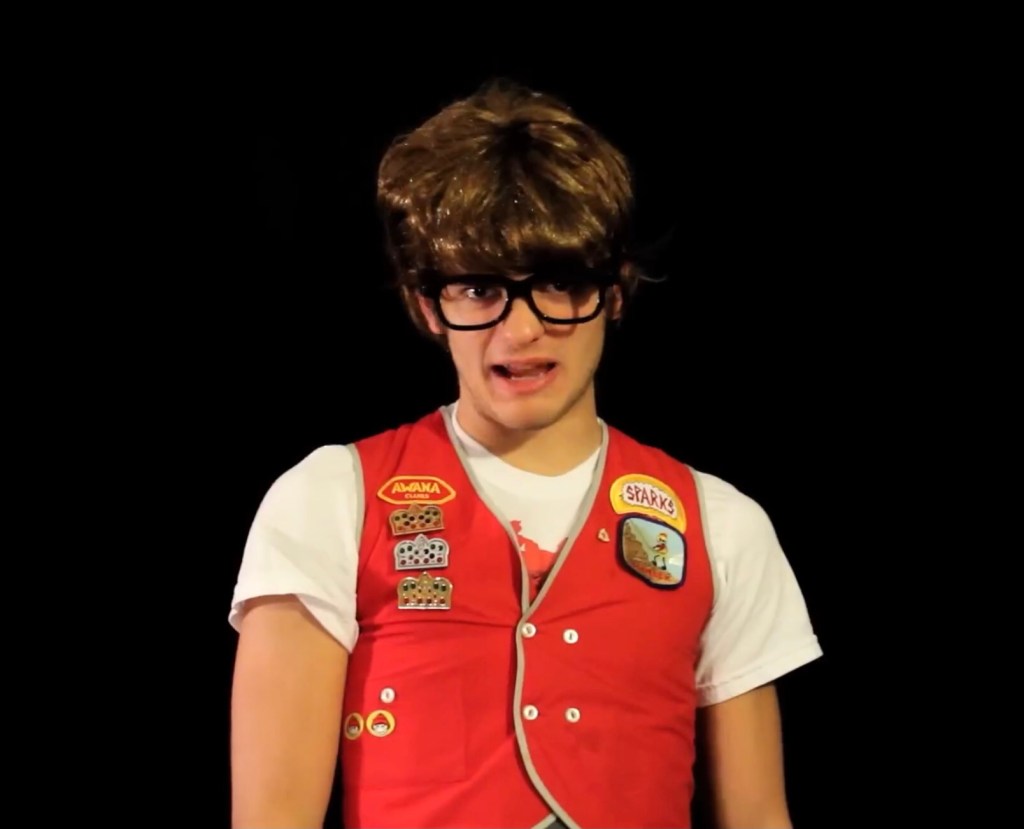
Nerdy Homeschooled Kids Are Our Hope?

(Photo credit: Blimey Cow*)

Yah! I know! My homeschooled kids look nerdy!

Look. We tried to tell them to only buy clothes at stores that cost five times what other stores cost, or twenty times what thrift stores cost.

We pleaded with them to only wear clothes that say little subtle things like “Lululemon” or “Nike”. We told them this.

We told them the kids would only like them if they wore those clothes.

And still, these dang homeschooled kids choose to wear their own stuff they found balled up in the bottom of their closet, or found themselves as a great treasure at a thrift store. (The cowboy hat phase really stank. Maybe because my high school nickname was “Hippiechick” and a cowgirl in the family messes with the cool teenage identity that still lurks inside me somewhere).

We explained these consequences clearly and slowly so they’d understand.

But they have the nerve to wear clothes they like instead of following the rules public high school kids tried to impose on them regarding clothing.

And you call OUR kids maladjusted?

Look – here’s a REAL LIFE ACTUAL HOMESCHOOLED kid to speak* on this topic (unlike me who spent twenty-plus years in public schools and public universities) and you can see how INFURIATING they are!

These are the clothes we told our homeschooled kids to wear:

(Photo credit: Blimey Cow*)

These are some of the clothes they actually wear:

(Photo credit: Blimey Cow*)

I mean, homeschooled kids just wear whatever they want!

And OUR kids are the ones with a problem?

Whatever.

Maybe being maladjusted to our culture ACTUALLY means you have your head screwed on straight.

Maybe the cookie-cutter mold everyone is supposed to fit is broken.

The most popular TED talk of all time is Sir Ken Robinson’s Do Schools Kill Creativity? (Maybe this talk is popular simply because of his name. Isn’t his name awesome? How did HE get a “Sir” in front anyway??)

But um, yeah, public schools are broken.

Maybe homeschoolers will get around to improving our society someday. They already are some of the kids giving society some hope.

Is homeschooling nerdy the new cool?

Hmm… Our family met a bunch of homeschooled kids we liked at a recent homeschooling conference. Some of them were ranchers. Maybe even I might . . .want . . . to wear a cowboy hat, after all. . . ??? Hmmm . . .

Blogpost Footnotes

*The majority of today’s blogpost photos are from a hilarious video produced by Blimey Cow: Seven Lies About Homeschoolers. Well worth your 4 minutes.

My Heart Reaches Through This Blog Post To Shake Your Hand. Really.

She reached her hand through the book I was reading and grabbed my throat, squeezing me.

Her name was Immaculée Ilibagiza and she was the author of the book Left to Tell. Her hand was her words, convicting me.

The book was about her true story of surviving the Rwandan genocide in 1994.

Up until that point, I had been reading, my cool drink by my side, sipping as I lounged in my comfy chair.

“Where were all the foreigners who should have been speaking to their politicians, holding up banners to raise awareness, sending us relief?”

Her hand round my throat.

In one sentence I had gone from passive observer to active participant. To an active participant who had failed the protagonist during her moment of terror.

Yes, where were we, anyway?

I read later that the criminal and civic trials of football star O.J. Simpson dominated the news during that time.

We were distracted.

And now it’s my turn to reach my hand through this blog and to touch your heart.

I want to shake your hand and say thank you.

I am writing this blog because I am looking for the types of conversations that I want to be having more frequently.

I can tolerate shallow conversations but just barely.

I mean, I can tolerate shallow conversation in the same way that dogs can handle cuddling. Most of us assume that dogs love to cuddle right, just like most of us assume that all we want is shallow conversation.

But multiple dog trainers have assured me that dogs DON’T, in fact, love to cuddle. “The cuddliest breeds can simply tolerate it,” one assured me.

As an aside, I have learned that the only true exception to this general principle is my own dog. If I wrap both my arms tightly around his neck and hold him close, he likes to stay with me.

(Doesn’t shallow conversation feel a bit like that sometimes?)

And so in the same way that most dogs (besides mine) can simply TOLERATE cuddles, many more of us than we realize, I think, also can simply TOLERATE shallow conversations.

Topics with depth are what I truly love to write and talk about with others.

And because you are interested in these kinds of deeper topics, that are further under the surface of things than the weather and that sometimes touch the depths of our hearts, well, my heart reaches out to your heart in a warm embrace.

I am thankful for you. You reading these posts encourages me to keep opening up to the deeper thoughts of life.

And please be encouraged to comment with your thoughts, so we can get the conversation going both ways.

Or join us in our next conversation and prayer time.

That’s all.

Science Proves Your Teen Doesn’t Have To Be A Jerk! (Part 2)

Last time I gave scientific evidence to begin to prove teens don’t HAVE to be jerks!

Here are some more nails in the coffin of the idea that teens are generally jerks. The kids from the homeschooling culture we encountered were not in the habit of constantly being jerks. Also consider:

2. My eyes didn’t have to unwillingly be subjected to myriad low-cut cleavages and to buts mysteriously falling out of swimwear (wait – you mean they DESIGN modern bathing suits to do that? WHAT now?) when we were at the swimming pool with many of the kids from the conference.

The young men were not lurking nearby with half-crazed hormone-induced semi-leers, noticing with appreciation the buts and cleavages so mentioned above.

They were just kids having fun.

Even the older ones.

In fact, assuming they would behave like this, with their cerebral cortex’ filled exclusively with ideations of sex, would be dishonoring to them all.

The adults who assume this is all our teens think about are the ones with the problem.

It’s almost as if these adults assume self-control isn’t a real thing.

These kids know better.

But the Holy Spirit produces this kind of fruit in our lives: love, joy, peace, patience, kindness, goodness, faithfulness, gentleness, and self-control. Ancient Text

We moderns like all this fruit of the spirit, except, of course, self-control. Who wants that? It turns out that the fruit all come together as one big package. Joy and self-control are linked.

Why would these youth grovel in the mud when they can soar into God’s purposes?

So they just had fun together, playing random games with all ages of the kids there, laughing, and creating a whirlpool with 50 kids running in a circle in the small hotel pool. One tried to dive into the shallow end of the pool on one occasion (they definitely didn’t all have FULLY developed cerebral cortexes yet). A random parent yelled at them and they cut it out.

Which brings me to my next point.

3) Parents were welcome, and generally unnoticed at all of these get-togethers. Reminds me of the study mentioned in the last post that they WOULD hang around adults willingly.

Why? Because it didn’t actually matter if the adults saw what they were doing or not.

And ironically, of course, the parents are bored making the decision of whether they should actually be there with their kids.

It doesn’t matter if they are there.

They yawn and go to bed, as my husband and I did, and we let our teen girls frolic around with a hundred youths we didn’t know until 2:00 in the morning.

We heard later that was when they got back. We were asleep.

We found them in the conference room of the hotel singing praise songs to God together late into the night, when I got up to get a drink of filtered water. They had a couple of guitars, a violin. Some younger kids were playing cards nearby.

Sometimes a table of adults sat nearby, sometimes not. No one was really paying that close attention.

These were good kids, in general.

They were used to having healthy, hearty fun.

And so they blew the expectations we had for youth wide open.

Maybe our expectations are too low.

Maybe we are the ones with the problem.

These homeschooled kids open a door to another culture for us to glimpse into for a short time, a weekend.

May this glimpse be enough to blow open our current expectations for our youth.

Is this another way that homeschooled kids may offer hope to our society and discussed here, here, and here?

Science Proves Your Teen Doesn’t Have To Be A Jerk! (Part 1)

It was the kind of research results that make you readjust your position in your seat, sit up straighter. Your hand automatically reaches out to tap the audiobook’s 10-second replay button a few times.

Huh?

Yup. Your teen doesn’t HAVE to be a jerk!!!

I was listening to the audiobook Your Best Brain: The Science of Brain Improvement by John Medina. Consider the following excerpt from Lecture 17:

“Epstein makes several important observations about the powerful effect of culture [on teens] . . . Epstein points to a study . . . looking at adolescent behaviour in 186 pre-industrialized societies. The research did NOT find lots of classic impulsive, obnoxious, get me away from my parent’s teenage behaviour in ALL of them. In fact, they found the opposite. More than half the young males exhibited no rebellious behaviour at all. Teens in these cultures spent most of their time hanging around their parents. They often helped with the chores both in family and in broader social activities”.

It kind of sounds like the homeschooled kids I met.

We attended a 4-day get-together with classically homeschooled kids from almost every US state and many Canadian provinces recently.

It was a culture shock.

In fact, the previous year, I attended this same event with only my kids. “You have to come to this event next year with us,” I pleaded with my husband. “This is culture shock.”

So my husband rearranged his holidays to attend this year with us.

“Uh-huh,” he agreed. He was glad he came. Some things just have to be seen to be believed.

The biggest culture shock is that all the teens weren’t jerks.*

“That must be your own rosy glasses you have put on only when you observe homeschooled kids!” you protest. “You don’t even know most of these kids for Pete’s sake!” you spit. (Wait- I know you don’t spit but it kind of ruins the effect if I say “You say politely”. Stay with me on this one.)

Consider the following reasons why it seems to me that these kids were not in the habit of constantly being jerks:

1) At the family barn dance (Can I stop there?) in which parents and all ages of family members including teens danced in the same big hall (Can I stop there?), often a very young child would join in the fray. Partners switched every few seconds sometimes, in a (deliberately) Jane Austen style. EVERY SINGLE TEENAGE BOY that I saw whose turn it was to dance with the 3-year-old, hunched down, smiled and spun the little girl in time to the music. EVERY SINGLE ONE.

Photo Source: Logos Online School Website

It was so sweet to watch teen after teen do this, it made me tear up.

These are not the teens skulking in corners, hoping for a chance to get outside and smoke some more pot.

As if this itself is not enough nails in the coffin of the myth that all teens HAVE to be aloof jerks, there is more evidence to follow that I will talk about next time.

Hold onto your hat. Adjust your position to sit up straighter and to take more notice. 

Entering this homeschooling culture, even through reading this blog post, may be enough to seriously damage your low expectations of today’s teens.

Check out this site below to blow another sock off the low expectations we so often hold for our teens.

the rebelution – rebelling against low expectations

Blogpost Footnotes

*Yes, of course, there are homeschooled kids who are jerks. I’m a jerk sometimes. So are you. And, similarly, there are myriad amazing public schooled kids. Of course!

We are observing cultural norms among various groups of teens. And the culture of these homeschooled teens aligns well with the science quoted in the study.

Are Ordinary Homeschooled Kids Reading Books Hope For Our Society?

It started off as an ordinary day.

We were visiting the largest city in our region and decided to stop in at the library to borrow some books for our youngest daughter’s summer reading cache.

We walked in awe, looking up in wonder at the size of the magnificent building. So many books inside!

I headed to the children’s section to seek some advice on finding excellent books.

My daughter perused the shelves as I asked the librarian for classic books that my daughter hadn’t read yet.

He jumped up, taking us on a tour through several sections and a couple of different floors of the library in our quest for books.

“These are the most popular books for her age group,” he began. My daughter scowled. Trashy and scary novels without much depth weren’t her cup of tea.

“No, I’m looking for classic books,” I said again.

He was visibly excited.

“This is such a joy,” he said, his voice quaking. “I don’t meet many kids who actually like to read.”

“Huh? What?” I thought? I was distracted by another book he placed in my hands.

“I’ve read that,” my daughter stated absently, going back to a nearby shelf.

Together the librarian and I found ten classic books. My daughter had read five of them, which we returned.

“Wow!” He was still excited. He was venting at me now, in a state of catharsis.

“You know, usually I only get requests to print things for kids when they are on computers. I don’t get to actually look for BOOKS.”

“WHAT now!?” I thought, again distracted as he showed me another book.

I shook my head, looking at my daughter’s reaction to yet another trashy, popular vampire page-turner.

“Could I ask,” he began hesitantly, “why you and your daughters prefer classic books?”

I wasn’t sure where to begin. He works in the children’s section of one of the largest libraries in our Province. (“Province” is the Canadian word for the American term “State”, Google Translate told me). Shouldn’t HE be trying to convince ME to choose books with more depth for my child?

I shrugged off the WHY of the question and spoke for a few minutes about mentors as the main characters of books, helping us to learn how best to navigate through life’s challenges.

He wasn’t convinced. “Well, I don’t know about THAT,” he countered.

The pieces of the puzzle of what he had been saying all morning came together into one unfinished whole. I was seeing a bigger picture, though I had to guess as some of the puzzle pieces were still not available.

But definitely, this ordinary day for us at the library was NOT an ordinary day for the librarians.

My homeschooled kids, who actually LIKE to read, were neon flashing lights in that place, screaming NOT ORDINARY! NOT ORDINARY!

Do we look in wonder at my kids?

No. Classically homeschooled kids consume challenging literature like fires consume water from fire hoses. They all read a lot.

We look in wonder at our culture, seen afresh through the contrast of our kids.

They’re missing out on all this?

Is this another way that homeschooling kids are hope for our society?

Ways that children reading classic books offer hope for our culture will be discussed in a future post.

Cowering In Fear Or Ready To Fight?

Yeah, I’ve been cowering in fear as mentioned here and here.

But we’re made to soar, our Heavenly Father, like the wind, buoying up our wings.

But I feel fearful again, this morning.

How do we keep Fear at bay, in its corner of the ring, instead of on top of me, rendering me immobile?

Learning about what we fear helps. I learned that alligators need water to survive and that annihilated my childhood fear of these animals living under my bed. (Don’t judge me). In the same way, in a future post, I will talk about how my raging Fear was soothed as I learned from scientists studying wildfire behavior.

Scientists have also learned* that if we exert some (even very minimal) level of control over stressful situations, our stress levels decrease dramatically. Translation: DOING something, even a very small thing about the stuff that bothers us makes us feel a WHOLE lot better. Fear stays on its own side of the wrestling ring for a while.

And so I got on my bike, put on my superwoman cape, delivered flyers, and our neighborhood became Firesmart.

But then as I watched the news one day, Fear grew and its shadow threatened to overwhelm me again.

No!

And so I act, again, I DO something to battle my Fear.

I write this post.

Talking about climate has been compared to having flatulence at a cocktail party.

And dwelling on Fear is only another way to drag more of us into the ring, with Fear immobilizing all of us.

NO!

What are you DOING to fight Fear?

Every action we take is food that we offer to our neighbors, strengthening them.

Let’s share our food together, feeding and encouraging one another.

What are you doing or is another doing that is food to strengthen you, to pick up your boxing gloves, and to meet with Fear head-on?

Let’s bandage each other’s wounds, offer each other a sip of water and a word of encouragement and then get back in the ring.

Because fighting is how we soar.

Here are a pair of boxing gloves.

Are you ready to put them on?

The counterintuitive, best things we can do to fight the weird weather that ramps up our fear will be discussed in future posts.

Blogpost Footnotes

*Lecture 14: How Your Brain Manages Stress by John J. Medina in Your Best Brain, from The Great Courses

Want To Be A Hero Too?

I AM a NEIGHBORHOOD CHAMPION. I AM the COMMITTEE CHAIR. (For those who don’t know, the CHAIR is the TOP, MOST IMPORTANT position on the committee).

Of what, you say?

Well, of this group I volunteer with, the Firesmart program. The goal is to educate people about the most common causes for houses to burn down due to wildfire, and then to focus on doing the most important interventions that decrease the risk of a house going up in flames.

We encourage each other to clean up the downed branches that are fire risks in our community. And of course, with tinder-dry forests where we live, in the BC interior of Canada, it seems the trees are shouting, “Please consume me with fire!”

Many of the cedars are already red, dried up, and sad, living in the arboreal never land between life and death.

But I digress.

The point I was trying to make is that, well, have you ever noticed how manipulation is overtly used in our culture? For example, the assumption is by the Firesmart program that Jane-Neighbor (aka me) would be more likely to spend another X number of hours volunteering if we raise her up a bit in her own eyes.

She is MORE important than others. SHE ALONE is the CHAIR, and my favorite, a CHAMPION. I rode around on my bike last summer delivering flyers with information about the Firesmart program. And now, I can wear a badge, and elevate myself to the lofty level of CHAMPION.

We are all so ridiculous, aren’t we? And by the way, when I throw away the title of Champion or Chair, what do we have left? “Regular Mom worried about her kid’s future”. Somehow that title isn’t as important, we feel. How wrong we are! The secret superpower, the cape under our regular clothes, regular moms, regular dads, is actually of course, concern for the wellbeing of our kids.

Learning what wildfire smoke does to kids’ brains* – that’s my superpower. I would wave my paper fan all day long in front of my kid’s faces . . . desperately . . . untiringly if that would decrease their potential cognitive impacts. I don’t even need the elevated title of CHAIR to do that!

Barring that, I ride on my bike distributing flyers. Maybe my kids and us won’t have to drive away in a car in a hurry this summer, flames licking at our tires. We read about others in Lytton, BC who endured that a few years ago. It would be nice not to do that, actually.

I’d rather just be a regular Mom, reading my book on the wharf at the lake while my kids play in the water.

Instead, I am a super mom, manipulated to feel important. The incredible truth is that “Mom Worried about Her Kids” is a force to be reckoned with. She is the true powerhouse.

Have you ever read about those moms who lifted a car off of their kids when they were in danger? The critical line in that article is that “. . . we humans are, quite simply, stronger than we think.”

Ready to lift the car of a sick culture off of our kids?

Come on, Moms, Dads. It’s time to reluctantly put away the novels, look at the future of our kids 20 years out, and work together to do some lifting. Our kids may be trapped between wildfire smoke and flames licking their tires unless we can find a way to turn this big ship, our culture, around. Time for some real heroes to show their stuff. On board?

For now, we can use our voice here, as one example of taking off our Clark Kent clothes and jumping into the battle. And let’s continue to talk about how to be a real hero in a future post, shall we?

Blogpost Footnotes

*Statement from this article: “A growing body of literature also suggests that exposure to particulate matter may have neuropsychological effects in children, including associations with ADHD, autism, school performance, and memory.”

Why Cleaning Eggs Off The Floor (Aka Homeschooling) Is Hope For Society

We attended our city’s annual carnival event. “Get me out of here!”, my brain screamed after only a few minutes.

One of the rides closed after a variety of kids vomited on it. The fair was too hot, too loud, too much garbage overflowing from the cans, junk food at every corner.

If this is one of the highlights of the year for our local kids, as it is for many, no wonder there is so much despair among youth.

We could smell pot as the older kids drifted past us.

If this is as good as it gets for our teens, it’s not very good.

Thankfully one of my kids, and her friend felt the same way.

We drove to a nearby nature park to the “Critter Day” event, to learn about local plants and animals.

It was much quieter. The wind blew through the trees nearby. The sounds were of muffled conversation and some hammers pounding softly as local kids assembled birdhouses.

I was enthralled as a scientist described a local insect that lays its eggs into a host’s body, which the larvae then feed on until it is time to hatch. He showed us the bug’s rear body part that was perfectly designed for this one bizarre behavior.

I was a bit distracted, looking elsewhere, while my daughter and her friend asked questions of the entomologist. They moved on.

“Are your kids homeschooled?” the entomologist asked me. “Huh? Oh yes. That’s my daughter’s friend and she is homeschooled too. Why do you ask?”

“I can always tell who the homeschooled kids are.”

“How?” I asked, intrigued.

“They ask questions and engage at a level of someone who is 40 or 50 years old.

I travel all around and see it time and again,” he continued. “The public school kids say, “Oh, bugs,” and move on, staring into their phones.

The public school kids don’t engage.”

I felt sad. “It’s quite a feat, isn’t it, that the public school system can stamp the love of learning out of children.”*

It dawned on me that this man was a Ph.D. type, definitely overqualified for conversations with Grade 3 kids. He had driven several hours, as a volunteer, to be there.

I was curious about what motivated him, and he unburdened his heart as we spoke.

“I’m really worried about the future of our society,” he continued.

“What do you do with kids who aren’t even engaged? But wherever I go, I find hope in the homeschooled kids. They are the ones asking questions, interested.

I travel to fairs hoping that kids are engaged with their natural world so they will be motivated to find solutions to the immense challenges we are facing as a culture.”

My eyes welled up.

Yes, how do we encourage kids to engage with the wonder of creation, so they may be motivated to protect this incredible biodiversity as unprecedented challenges face our culture?

Perhaps providing hope for our culture is another reason to consider homeschooling.

You got this, Mom, Dad.

Keep being a world changer, Mom, Dad, in your own, hectic, cleaning-eggs-off-the-floor way.

Every homeschooling day you make it through lends a bit more hope to our society.

Blogpost Footnotes

*The public school system is undeniably broken. This TED talk, for example, is the most popular TED talk of all time.

Not Wanting to Hear = Rotten Brain

If I hide in a rock cleft of a remote mountain, forage roots for my meals, and don’t speak to another human, will I then . . . yet . . . be an independent thinker?

No. I would become a lunatic, a crazy person, seeking human society with every breath of my lungs.

And so, we accept who we are.

Humans are social beasts, like horses.

If you exclude a horse from horse “society”, the mother keeping him for a few moments from joining the herd, there is exquisite pain for the foal. The foal adjusts his ways and becomes more amenable in groups.

So with people. We are made to share food, inventions, ideas. Caught off guard enjoying some roasted beetle grubs by the community fire, the cave person encounters a new idea. Does she grab hold of the idea, assess it, and look at all angles before inserting it into her brain, that this idea is TRUE?

Certainly, there are some ideas, perhaps too unusual to be ignored, or too infrequent to have a well-worn route along neurons to be inserted into the brain, that she will take hold of before it enters her consciousness. She will evaluate, re-examine. Some ideas she will toss.

But many, many ideas slip by her unnoticed, as she is distracted with the latest joke and a swig of fermented taro root. Sure. That idea sounds fine. And now she believes it too. We believe each other. We are social animals.

And this is how culture is born.

A beautiful thing is culture, which is defined as a set of shared attitudes, values, goals, and practices. It is amazing to see the variety of costumes, foods, and yes, ideas that a community of people who live in proximity share

Except when we are wrong.

Time WILL expose the ideological rot within our culture, that is currently hidden, like a large piece of lettuce covering rotten meat.

Germans shouting allegiance to Hitler was cultural rotten meat in the brain.

And every culture has widespread beliefs that are, well, wrong. Including MY culture, including YOURS. Including MY brain, including YOURS.

Knowing that some of the stuff that YOU believe is a rotten, filthy mess is a good place to start in the goal of healthy ideology.

Time to dig out the old ears, polish ’em up, reattach them, and give them a listen. How may you be wrong?

And the wider question, which is just as important but crucial to reevaluate and assess ideas before we absorb them unthinkingly is, “How may the majority of people that you currently listen to and trust, your culture, be wrong?”

Truly independent thinking perhaps begins here in the nuanced tightrope of understanding what my trusted group believes and what the OTHER group believes. Do you have time to truly listen, to re-evaluate, to toss some of your OWN cultural rot?

Freedom begins here.

. . . some of the people of Jerusalem said . . . “And yet we know where this man came from. The Messiah* is going to come out of nowhere. Nobody is going to know where he comes from.” The Message

Lord, help us not to be like the people in the quote above, who demonstrate ancient rot in the brain. They do not ask questions, or clarify. In fact, they were wrong. They are confident and wrong. The Messiah was to come from Bethlehem and was not simply to “come out of nowhere”, their own scriptures attest.

Help us, Jesus, to ask a question instead of asserting confidently, pulling out bits of our rotten brains for all to see. Help us Lord, to ask you and our neighbor questions, and to begin to learn to listen. Holy Spirit, would you gently nudge and remind us to consider your presence increasingly more often before we speak, today? And help us to keep our ears screwed on tight, we pray.

Blogpost Footnotes

*The Messiah is the foretold savior or liberator