
It started off as an ordinary day.
We were visiting the largest city in our region and decided to stop in at the library to borrow some books for our youngest daughter’s summer reading cache.

We walked in awe, looking up in wonder at the size of the magnificent building. So many books inside!

I headed to the children’s section to seek some advice on finding excellent books.
My daughter perused the shelves as I asked the librarian for classic books that my daughter hadn’t read yet.
He jumped up, taking us on a tour through several sections and a couple of different floors of the library in our quest for books.
“These are the most popular books for her age group,” he began. My daughter scowled. Trashy and scary novels without much depth weren’t her cup of tea.
“No, I’m looking for classic books,” I said again.
He was visibly excited.
“This is such a joy,” he said, his voice quaking. “I don’t meet many kids who actually like to read.”
“Huh? What?” I thought? I was distracted by another book he placed in my hands.
“I’ve read that,” my daughter stated absently, going back to a nearby shelf.
Together the librarian and I found ten classic books. My daughter had read five of them, which we returned.
“Wow!” He was still excited. He was venting at me now, in a state of catharsis.
“You know, usually I only get requests to print things for kids when they are on computers. I don’t get to actually look for BOOKS.”
“WHAT now!?” I thought, again distracted as he showed me another book.
I shook my head, looking at my daughter’s reaction to yet another trashy, popular vampire page-turner.
“Could I ask,” he began hesitantly, “why you and your daughters prefer classic books?”
I wasn’t sure where to begin. He works in the children’s section of one of the largest libraries in our Province. (“Province” is the Canadian word for the American term “State”, Google Translate told me). Shouldn’t HE be trying to convince ME to choose books with more depth for my child?
I shrugged off the WHY of the question and spoke for a few minutes about mentors as the main characters of books, helping us to learn how best to navigate through life’s challenges.
He wasn’t convinced. “Well, I don’t know about THAT,” he countered.
The pieces of the puzzle of what he had been saying all morning came together into one unfinished whole. I was seeing a bigger picture, though I had to guess as some of the puzzle pieces were still not available.
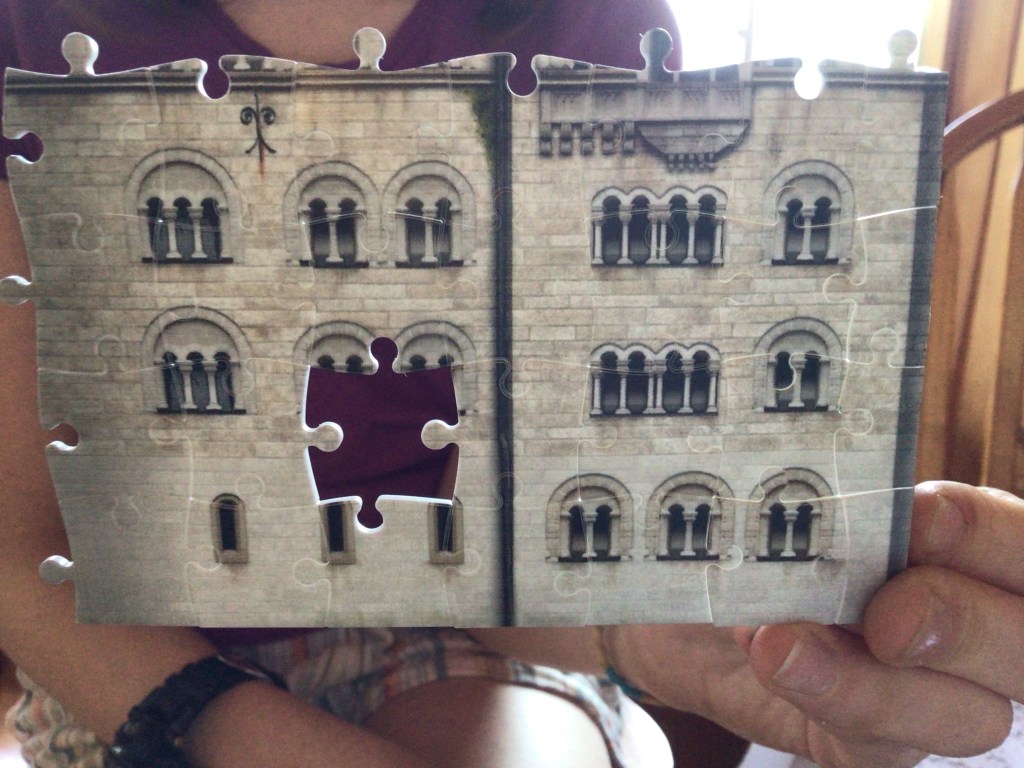
But definitely, this ordinary day for us at the library was NOT an ordinary day for the librarians.
My homeschooled kids, who actually LIKE to read, were neon flashing lights in that place, screaming NOT ORDINARY! NOT ORDINARY!
Do we look in wonder at my kids?
No. Classically homeschooled kids consume challenging literature like fires consume water from fire hoses. They all read a lot.
We look in wonder at our culture, seen afresh through the contrast of our kids.
They’re missing out on all this?

Is this another way that homeschooling kids are hope for our society?
Ways that children reading classic books offer hope for our culture will be discussed in a future post.

 Restoring Life